


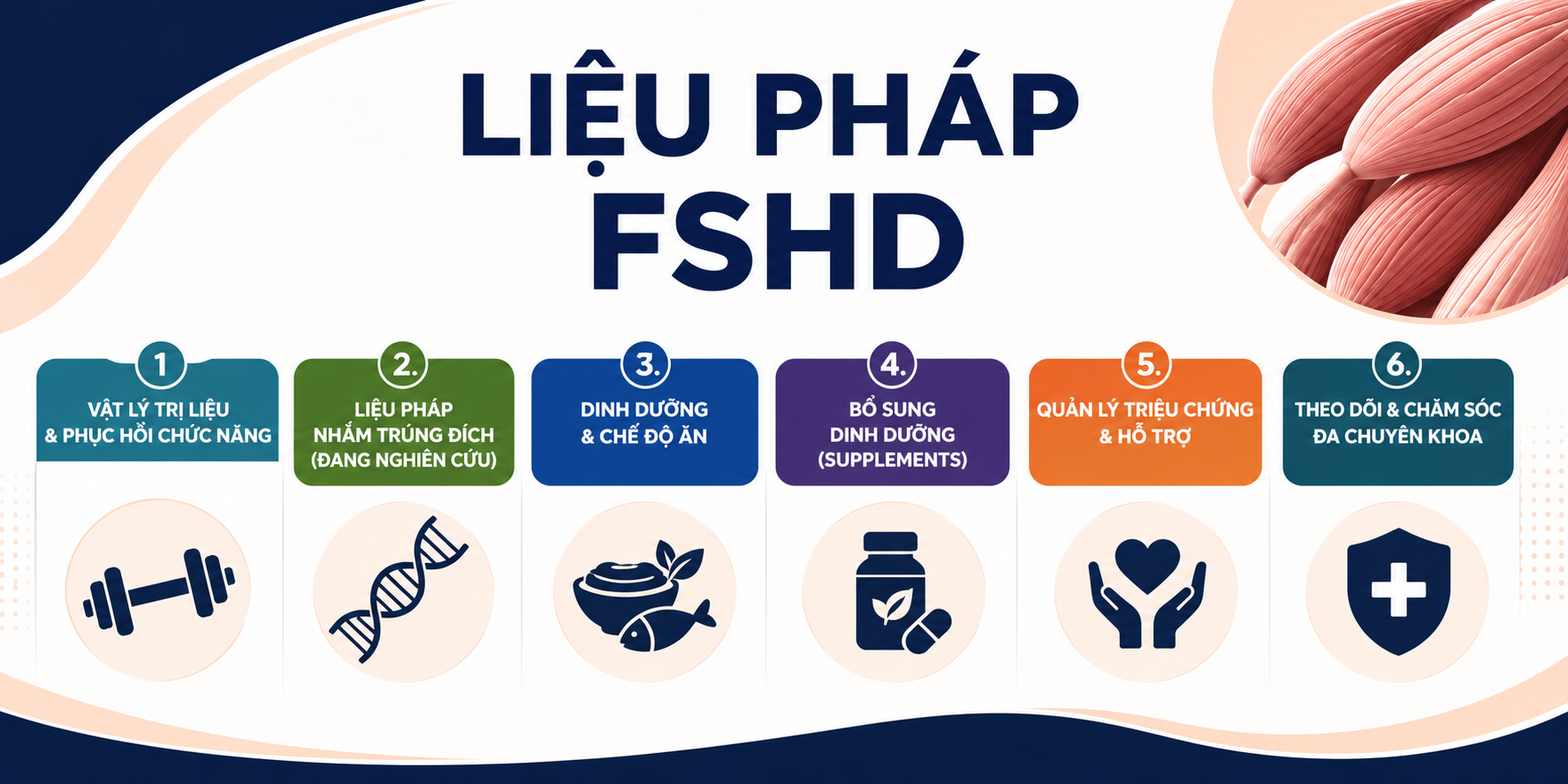
THERAPY FOR FACE-SHOULD-ARM MUSCLE DYSFUNCTION (FSHD)
FSHD is a diseaseChronic, slow progression and no cure, but:
👉Can be effectively controlled if treated properly
Most important key:
Comprehensive and ongoing care → helps slow disease progression and significantly improve quality of life
Model-based treatment of FSHDmultidisciplinary care, including:
- Physical therapy
- Proper nutrition
- Regular medical monitoring
- New therapies are being studied
Main therapies
🏥 3.1. Physical therapy & rehabilitation
Objective:
- Maintain muscle strength and function
- Slows down the process of secondary muscle atrophy
- Improve mobility and living ability
Method:
- Low-intensity exercise
- Strengthen the shoulder and upper back muscles
- Aerobic exercise: walking, light cycling
Important note:
- Avoid overexercising → it can causemore severe muscle damage
- Personalize exercise program according to disease severity
🧬 3.2. Targeted therapy (under investigation)
This is an advanced, focused treatment directionInhibits the DUX4 gene– the root cause of the disease.
Main research directions:
- Antisense oligonucleotide (ASO): RNA inhibition of DUX4
- CRISPR/Cas9: gene editing
- Epigenetic therapy: regulates methylation of the D4Z4 region
👉 This is consideredmost promising treatment directionCurrently, in clinical trials.
💊 3.3. Nutrition & protein
Nutrition plays an important role in controlling disease progression.
Role of proteins:
- Supportmuscle regeneration and repair
- Slows down muscle degeneration
Recommendation:
- DietRich in high quality protein
- Make sure you have enough power
- Balance vitamins and minerals
🧪 3.4. Supplements
Some supplements may support muscle function:
Potential active ingredients:
- L-carnitine: increases muscle energy metabolism
- Alpha Lipoic Acid: anti-oxidant, supports mitochondria
- Vitamins A, D, K2: protects muscle and bone cells
- Taurine: improves muscle contraction, reduces fatigue
-
Minerals (Zn, Se, Mg):
- Supports protein synthesis
- Reduce inflammation and oxidative stress
⚠️Note:
- Does not replace primary treatment
- Should be used under doctor's instructions
❤️ 3.5. Symptom management & support
- Control muscle pain
- Reduce fatigue
- Psychological support
- Mobility aids (braces, shoulder supports, etc.)
👉 Goal:improve quality of life and maintain function
🏥 3.6. Multi-specialty monitoring & care
Periodic monitoring is required with many specialties:
- Neuromuscular
- Rehabilitation
- Nutrition
- Respiration
- Cardiovascular disease (rare but needs screening)
MyFSHD UNITED STATES
Dr. Research Center Jones Lab
Address: University of Nevada, Reno, Nevada, United States
FSHD VIETNAM
0768291089
CONTACT

Vietnam